
Why Google's AI Chips Challenge Nvidia's Market Dominance

1. Introduction/Why this topic matters
The market for artificial intelligence (AI) chips has emerged as a pivotal arena in modern technology, with significant implications for various sectors ranging from cloud computing to autonomous vehicles. The demand for advanced processing capabilities has surged, as organizations seek to harness AI for improved decision-making, automation, and predictive analytics. As a result, the competition among chip manufacturers has intensified, with key players striving to innovate and capture market share.
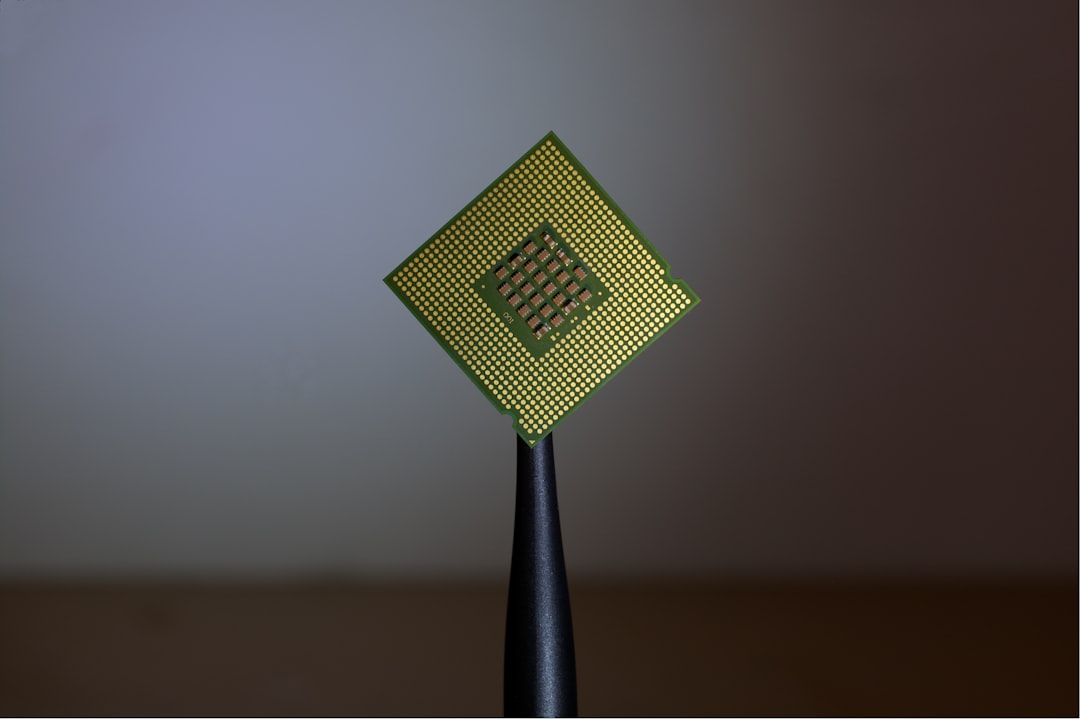
Google’s Tensor Processing Units (TPUs) represent a crucial component in this landscape. Designed specifically for machine learning tasks, TPUs offer accelerated performance for AI applications. By optimizing both hardware and software, Google aims to enhance the efficiency of its AI offerings, thereby strengthening its position in the cloud services market. Investors may find Google’s strategic initiatives noteworthy, as they could potentially disrupt the current dynamics dominated by established players.
Currently, Nvidia Corporation (NASDAQ:NVDA) holds a commanding lead in the AI chip market, with its GPUs being widely regarded as the gold standard for deep learning applications. Nvidia's market dominance has led to concerns regarding potential monopolistic behavior, which could stifle innovation and competition. The company's products account for a substantial portion of the AI hardware ecosystem, with estimates suggesting that Nvidia controls over 70% of the global market share in AI-specific chips. This level of influence may pose challenges for new entrants and established competitors alike, potentially shaping the future of AI development.
As the AI chip war escalates, with companies like Google attempting to chip away at Nvidia's dominance, investors may want to consider the broader implications of these shifts. The rise of alternative chipmakers, including Advanced Micro Devices (AMD), which has reported a 77% revenue growth over recent quarters, suggests that a diverse range of players could emerge in this evolving market. This competitive landscape may encourage innovation and drive advancements in AI technology, ultimately benefiting various sectors reliant on AI capabilities.
2. Advantages and Disadvantages
As Google intensifies its efforts to compete with Nvidia Corporation (NASDAQ: NVDA) in the AI chip market, it is essential for investors to consider both the potential advantages and disadvantages of Google's strategy surrounding its Tensor Processing Units (TPUs).
2.1 Potential Advantages
- Performance and Efficiency: TPUs may offer superior performance in specific AI tasks compared to Nvidia's Graphics Processing Units (GPUs). For instance, TPUs are designed for high throughput and can potentially achieve up to 15 times the performance in certain machine learning computations.
- Innovative Deal-Making Strategies: Google has been deploying creative strategies to penetrate the AI chip market, such as entering into partnerships and collaborations that could enhance the adoption of TPUs among developers and businesses.
- Investor Support: Backing from influential investors like Jeff Bezos could significantly benefit startups like CuspAI, which are focused on innovative chip-making solutions. Such support may lend credibility and attract additional funding, potentially accelerating market entry and technology development.
- Market Diversification: By expanding its portfolio to include TPUs, Google could diversify its offerings, potentially reducing reliance on its core advertising business and capitalizing on the growing demand for AI solutions.
2.2 Potential Disadvantages
- Established Competition: Google faces significant challenges in competing against established Nvidia technology, which has a strong market presence and established customer loyalty. Nvidia's GPUs have been the standard in AI applications, making it difficult for TPUs to gain traction.
- Market Volatility Risks: The semiconductor market is known for its volatility, which could pose risks to Google's investments in TPUs. Fluctuations in demand and supply chain disruptions may impact production costs and pricing strategies.
- Investor Confidence: Recent sell-offs in semiconductor stocks, including those of Nvidia and Advanced Micro Devices (AMD), have raised concerns among investors. Such market dynamics could potentially diminish confidence in new entrants like Google's TPUs, affecting their market reception.
- Technological Adoption Challenges: The transition from Nvidia's GPUs to Google’s TPUs may require significant changes in software and infrastructure, which could deter potential customers who are unwilling to invest time and resources into adapting to a new technology.
In summary, while Google’s ambitions in the AI chip market present various promising advantages, investors must also remain cognizant of the inherent challenges and risks associated with this rapidly evolving sector.

3. Practical options/methods
Investors may find opportunities in the rapidly evolving landscape of artificial intelligence (AI) chip companies, particularly as competition intensifies between major players like Google and Nvidia Corporation (NASDAQ:NVDA). One practical method for gaining exposure to this sector is through exchange-traded funds (ETFs), such as the SOXS (Direxion Daily Semiconductor Bear ETF). While SOXS is designed to profit from declines in semiconductor stocks, its performance can be indicative of market sentiment and might provide insights into broader trends affecting the AI chip industry.
To effectively track performance in this niche market, investors could utilize various tools and platforms. Websites like Yahoo Finance and Bloomberg offer comprehensive stock screening tools and performance tracking features that allow investors to monitor the latest trends and metrics related to AI chip companies. These platforms may provide key indicators, such as price-to-earnings (P/E) ratios, which typically range from 15 to 25 for technology stocks, thus helping investors assess valuation and growth potential.
When considering individual companies, Advanced Micro Devices, Inc. (NASDAQ:AMD) serves as a notable example. AMD has demonstrated impressive revenue growth in the AI sector, achieving a 77% increase over the past eight quarters. In contrast, Navitas Semiconductor, Inc. (NASDAQ:NVTS) has reported a revenue decline of 58%, which could suggest that AMD is capitalizing on its AI capabilities more effectively than its competitors.
While investors may view the recent performance of AI chip companies as a reflection of their long-term potential, it is also essential to remain aware of market volatility. Cathie Wood, head of Ark Investment Management, has recently taken profit by selling $11.7 million worth of semiconductor stocks, underscoring the unpredictable nature of this sector. Furthermore, a downgrade from a Korean brokerage has led to a significant sell-off in major chip stocks, causing ETFs like SOXS to surge. This fluctuation highlights the importance of staying informed and agile in the current investment climate.
As the AI chip market continues to evolve, keeping an eye on both individual companies and broader industry trends will be crucial for investors seeking to navigate this dynamic landscape.
4. Important considerations
Investors considering the burgeoning market for artificial intelligence (AI) chip stocks and related exchange-traded funds (ETFs) should be aware of several important considerations that could impact their investment outcomes.
4.1 Tax Implications
The tax implications of investing in AI chip stocks and ETFs can vary significantly based on the investor's jurisdiction and the specific investment vehicles chosen. For instance, capital gains on stocks held for over one year may be taxed at a lower rate compared to short-term gains, which are typically taxed as ordinary income. Investors may also need to consider the implications of dividends, which are often subject to withholding taxes. It is advisable for investors to consult with a tax professional to fully understand how their investments in companies like NVIDIA Corporation (NASDAQ: NVDA) or ETFs such as the SOXX (iShares Semiconductor ETF) could affect their tax liabilities.
4.2 Understanding Fees
Investors should also be cognizant of the fees associated with technology-focused ETFs. Management fees for these funds can typically range from 0.5% to 1.5% of assets under management, which can erode overall returns over time. Additionally, trading commissions may apply when buying or selling ETF shares. Investors may find it beneficial to compare the expense ratios of different ETFs to assess their potential impact on long-term investment performance.
4.3 Risks in the Semiconductor Market
The semiconductor market, while offering significant growth potential, is not without its risks. Supply chain issues can arise from geopolitical tensions or natural disasters, potentially leading to shortages that may affect production capabilities. Moreover, competition is fierce among companies like Advanced Micro Devices, Inc. (NASDAQ: AMD) and emerging players such as Navitas Semiconductor. Investors should be aware that market fluctuations can result in considerable volatility, as evidenced by recent trends where established firms saw substantial declines in market capitalization due to downgrades and profit-taking activities.
As the landscape of AI chip investments evolves, investors may want to remain vigilant regarding these considerations. Understanding the nuances of tax implications, fees, and market risks can aid in making informed decisions in this dynamic sector.
5. Conclusion
In summary, Google’s efforts to challenge Nvidia Corp's (NASDAQ:NVDA, XETRA:NVD) dominance in the artificial intelligence chip market may significantly alter the competitive landscape. By leveraging its Tensor Processing Units (TPUs) and engaging in strategic partnerships, Google is positioning itself as a formidable player in an industry historically led by Nvidia. This shift could potentially lead to a more diversified market, where multiple companies may compete for market share, impacting pricing and innovation trajectories.
Investors should remain vigilant regarding the evolving dynamics in the AI chip sector. The recent backing of AI startups, such as CuspAI, which focuses on discovering new materials for chipmaking, highlights the ongoing innovation and investment in this field. The semiconductor market is currently experiencing volatility, as evidenced by Cathie Wood’s decision to liquidate $11.7 million worth of semiconductor stocks, indicating that even well-regarded firms face challenges amid fluctuating valuations.
With companies like Advanced Micro Devices (AMD) experiencing substantial revenue growth—approximately 77% over eight quarters—while others like Navitas Semiconductor face declines of about 58%, the divergence in performance among chipmakers could create both risks and opportunities for investors.
Furthermore, the surge of the SOXS Semiconductor Bear ETF (SOXS) amidst a downturn for major players such as Nvidia and AMD illustrates the market's sensitivity to news and analyst ratings, often leading to rapid shifts in sentiment.
As the AI chip sector continues to evolve, investors may want to consider diversifying their investments into emerging AI technologies that could potentially yield gains. Staying informed about developments in this market will be crucial for navigating its complexities. It is advisable for investors to conduct their own research to assess the potential impacts on their investment strategies.
Disclaimer: This article was generated using AI technology and is for informational and educational purposes only. It does not constitute investment advice, recommendation, or solicitation. All investment decisions are solely the responsibility of the individual investor. Past performance does not guarantee future results. Investments involve significant risks, including the potential loss of principal. Before making any investment decisions, please conduct your own research and consult with qualified financial and tax professionals.